JIAOZUO ZHONGWEI SPECIAL PRODUCTS PHARMACEUTICAL CO.,LTD

Views: 0 Author: Site Editor Publish Time: 2026-06-01 Origin: Site
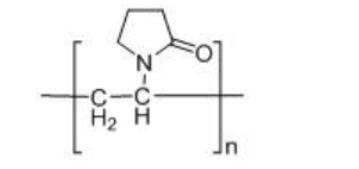
Formulators rarely see Polyvinylpyrrolidone as just another synthetic polymer. Instead, they rely on it as a critical problem-solving excipient. It actively overcomes modern formulation bottlenecks. We see it rescue poorly soluble active pharmaceutical ingredients (APIs) and reinforce fragile tablets during high-speed manufacturing. Walter Reppe first synthesized this compound using acetylene chemistry in 1939. Since then, it has evolved into a globally recognized, pharmacopeia-standardized essential.
Modern pharmaceutical manufacturing demands precision. You cannot simply pick any polymer grade off the shelf and expect consistent dissolution. This article provides formulation scientists and procurement teams a clear evaluation framework. You will learn how to select the right grade based on application route, biological safety requirements, and manufacturing realities. We will explore how molecular weight dictates physiological function. By mastering these parameters, you ensure your teams build stable, compliant, and highly effective drug delivery systems.
Formulation Versatility: PVP acts as a universal binder, film-former, and solubility enhancer, directly reducing manufacturing scrap rates and boosting bioavailability.
Grade Selection is Critical: The K-value (molecular weight) strictly dictates the application—low K-values are required for injectables to ensure renal clearance, while high K-values suit solid dose binding and topical formulations.
Category Framework: Pharmaceutical evaluation standardizes PVP into three main pillars: Soluble (Povidone), Insoluble (Crospovidone), and Copolymer (Copovidone).
Global Compliance: High-purity grades meet strict pharmacopeial standards (USP, Ph.Eur, JP) and hold FDA GRAS status, though endotoxin control remains a strict procurement checkpoint.
Drug development teams face constant pressure to deliver robust formulations. Many newly discovered APIs exhibit terrible water solubility. Others compress poorly during large-scale manufacturing. Polyvinylpyrrolidone directly solves these commercial and scientific hurdles.
Modern drug pipelines feature a high percentage of hydrophobic molecules. These APIs fail to dissolve efficiently in the human gastrointestinal tract. Formulators use soluble PVP grades to form temporary complexes alongside these challenging APIs. The polymer chain physically wraps around the drug molecule. This complexation process works optimally in mildly acidic environments where the pH drops below 6. Once ingested, the polymer draws water into the matrix. This action breaks down the complex and releases the API in a highly bioavailable state. We frequently use this technique to transform a useless, insoluble powder into a life-saving oral dosage form.
Solid dose manufacturing demands flawless mechanical properties. Powders must flow smoothly into tablet presses. If they lack cohesiveness, the resulting tablets will crumble. As a premier binder, this polymer enhances powder flow and compressibility. It dramatically strengthens capsule shell toughness. Production managers track tablet friability and capping rates closely. By integrating the correct polymer grade, facilities directly mitigate these defects. Less capping means fewer rejected batches. Lower friability means less dust in the packaging line. Ultimately, this reduces manufacturing scrap rates and protects profit margins.
A successful drug must survive months or years in varied storage conditions. Formulators leverage polymer matrices to secure long-term product viability. The excipient provides several distinct stability benefits:
Odor masking: It traps volatile compounds, masking unpleasant smells inherent to certain chemical APIs.
Crystallization delay: It holds drugs in an amorphous state, preventing them from reverting to poorly soluble crystalline forms over time.
Oxidation protection: The dense polymer network creates a physical barrier, protecting sensitive molecules from oxidative degradation.
Pharmacopeias do not treat this polymer as a single entity. They categorize it into distinct functional families. Selecting the right variant determines the success of your dosage form.
Pharmaceutical evaluation standardizes the excipient into three main pillars. Each serves a drastically different manufacturing objective.
Polymer Variant | Pharmacopeia Name | Primary Application | Key Characteristic |
|---|---|---|---|
Soluble PVP | Povidone | Wet granulation, liquid suspensions | High water solubility, excellent binding |
Insoluble Cross-linked | Crospovidone | Superdisintegrant for tablets | Rapid swelling without forming a gel |
Vinylpyrrolidone-vinyl acetate | Copovidone | Direct compression, hot-melt extrusion | Lower hygroscopicity, superior plasticity |
Povidone acts as the standard choice for traditional wet granulation. You dissolve it in water or alcohol to create a binding solution. Crospovidone takes a different approach. Manufacturers cross-link the polymer chains, rendering them completely insoluble. Instead of dissolving, it absorbs water and swells rapidly. We use it primarily as a "superdisintegrant" to ensure rapid tablet breakdown in the digestive tract. Copovidone introduces vinyl acetate into the polymer chain. This addition lowers moisture uptake. Teams evaluate Copovidone heavily for moisture-sensitive APIs and advanced hot-melt extrusion processes.
You cannot specify Povidone without declaring its K-value. This number dictates both manufacturing behavior and biological safety. The K-value derives from the Fikentscher equation. This mathematical model evaluates the relative viscosity of a polymer solution compared to a pure solvent. Higher relative viscosity yields a higher K-value. Common commercial grades range from K12 to K90.
The K-value directly correlates to the Viscosity-average molecular weight (Mv). A K12 grade indicates very short polymer chains. A K90 grade indicates massive, tangled polymer networks. You must understand this metric thoroughly. Mv serves as the most critical parameter for determining biological clearance. If you select a K-value too high for an injectable formulation, the patient cannot metabolize or excrete it safely.
Formulation teams must rigorously align polymer chain length to the intended delivery route. A grade perfectly suited for a tablet might pose severe health risks if injected.
Oral Solid Formulations: Formulators frequently specify mid-range grades like K25 and K30. These grades provide optimal binding strength without excessively prolonging tablet disintegration. We apply them in wet granulation, spray drying, and freeze-drying operations. Advanced supercritical fluid technologies also utilize K30 to engineer microscopic solid dispersions.
Injectable Formulations (High-Risk Evaluation): Parenteral delivery demands strict scrutiny. Here, the polymer acts as a co-solvent and colloidal stabilizer. It prevents APIs from precipitating in the vial. However, formulators face a strict physiological constraint. You can only use low molecular weight variants like K12 and K17 intravenously. Human kidneys filter molecules up to approximately 25,000 Daltons. If you inject a K30 or K90 grade, the polymer chains exceed this renal threshold. Because the body cannot break the synthetic carbon backbone, the oversized molecules circulate indefinitely. They eventually accumulate in the Reticuloendothelial System (RES), potentially causing severe storage diseases.
Topical, Ophthalmic, and Advanced Delivery: Formulators exploit the polymer's safety profile across exterior tissues. In wound care, povidone-iodine (PVP-I) complexation delivers long-lasting, non-irritating disinfection. The polymer releases iodine slowly, killing pathogens without burning the tissue. For ophthalmic solutions, we use high K-values as viscosity modifiers. They thicken artificial tears, prolonging ocular retention time and soothing dry eyes. Researchers currently explore next-gen morphologies. Electrospun nanofibers and cross-linked nanogels enable targeted, controlled-release systems for complex oncology drugs.
Procurement teams require robust toxicological data before onboarding any excipient. The global regulatory consensus heavily supports high-purity povidone usage.
The FDA grants this polymer GRAS (Generally Recognized As Safe) designation. Global health authorities trust its physiological inertness. The World Health Organization (WHO) evaluated the dietary and pharmaceutical exposure risks. They established an Acceptable Daily Intake (ADI) limit of 0-50 mg/kg. This generous allowance reflects the material's inherent safety.
Pharmacokinetic data drives excipient approval. The ADME profile for oral povidone looks exceptionally clean. The polymer proves chemically inert inside the human body. When swallowed, the gastrointestinal tract does not absorb it. Gut enzymes cannot metabolize the carbon-carbon backbone. It passes through the digestive system completely unchanged. Extensive animal and human trials show it exhibits zero mutagenic or carcinogenic properties. It simply does its job delivering the API and exits the body safely.
Global monographs dictate strict analytical controls. The United States Pharmacopeia (USP), European Pharmacopoeia (EP), and Japanese Pharmacopoeia (JP) harmonize most testing criteria. High-grade sourcing requires more than just functional performance. Suppliers must prove heavy metal compliance, track residual monomers (like unreacted N-vinylpyrrolidone), and enforce rigorous microbiological limits. A trusted supplier maintains comprehensive documentation demonstrating routine compliance across all three major pharmacopeias.
Selecting the right specification on paper represents only half the battle. Procurement and quality assurance teams must navigate real-world manufacturing variables and sourcing risks.
Chemical synthesis creates the polymer, but the drying process defines its physical performance. Manufacturing methods dramatically impact particle morphology. Chemical producers typically spray-dry K30 grades. This process yields hollow, spherical particles. These spheres offer massive surface area, allowing them to dissolve almost instantly in formulation tanks. Conversely, chemical plants cannot easily spray-dry K90 solutions due to immense viscosity. They must drum-dry the high molecular weight polymer instead. Drum drying produces dense, irregular flakes. Formulation scientists must account for these morphological differences. A drum-dried K90 flake requires much longer agitation to hydrate completely compared to a spray-dried K30 powder.
We must advise procurement teams clearly: a "pharmaceutical grade" label does not automatically qualify a product for injectable use. Intravenous formulations require extreme microbiological control. Dead bacterial cell walls release endotoxins. If these pyrogens enter a patient's bloodstream, they trigger dangerous fevers and immune shocks. Suppliers must provide certified pyrogen-free or low-endotoxin lots specifically manufactured for parenteral use. Quality teams must verify these lots undergo rigorous testing per Ph.Eur and USP endotoxin standards before releasing them to the sterile manufacturing floor.
Quality assurance labs must verify raw materials quickly upon arrival. Misidentified excipients destroy multi-million-dollar production runs. Standard analytical verification methods provide clear chemical signatures for buyers.
Common IQC Analytical Signatures | ||
Test Method | Target Marker | Expected Observation |
|---|---|---|
IR Spectroscopy | Hydroxyl (OH) Stretch | Broad absorption peak near 3400 cm-1 (due to bound moisture) |
IR Spectroscopy | Amide I Band (C=O) | Strong, sharp peak around 1645 cm-1 (confirms pyrrolidone ring) |
HPLC Profiling | Residual Monomer | Trace limits of unreacted N-vinylpyrrolidone (typically < 10 ppm) |
Kinematic Viscosity | Polymer Chain Length | Viscosity reading strictly matching the declared K-value range |
By enforcing these standard signatures, your incoming quality control team prevents off-spec or counterfeit materials from entering the supply chain.
Polyvinylpyrrolidone stands as a highly adaptable, problem-solving excipient. It rescues insoluble drugs, strengthens solid dose mechanics, and enables advanced ocular and wound care therapies. However, success demands strict alignment. Formulation teams must match the exact K-value and polymer variant (soluble versus cross-linked) to their specific delivery route. Ignoring physiological constraints—such as the renal clearance limit for injectables—invites catastrophic clinical failures.
Your next steps should focus on rigorous vendor qualification. Begin your evaluation by requesting Drug Master Files (DMF) from prospective suppliers. Analyze the K-value distribution data to ensure batch-to-batch consistency. Finally, if you develop parenteral products, demand hard evidence of endotoxin limits before initiating any costly formulation trials.
A: Low K-values (like K12 or K17) are rapidly excreted via urine. They filter easily through the kidneys. Accumulation only poses a risk if you administer high-molecular-weight grades (like K30 or K90) intravenously. The body cannot metabolize these large chains, leading to accumulation in the Reticuloendothelial System (RES). Oral formulations do not accumulate regardless of K-value.
A: This is a common misconception. Despite being a synthetic polymer, its chemical inertness and high biological compatibility make it vastly different from commercial plastics. True allergic reactions to povidone remain exceedingly rare. Doctors occasionally misdiagnose iodine or penicillin allergies as polymer sensitivities.
A: No. It maintains extreme chemical inertness. It does not degrade your API. Interactions typically remain limited to desirable physical complexation. The polymer relies on transient hydrogen bonding to trap molecules. This temporary physical interaction boosts water solubility rather than causing unwanted chemical degradation.