JIAOZUO ZHONGWEI SPECIAL PRODUCTS PHARMACEUTICAL CO.,LTD

Views: 0 Author: Site Editor Publish Time: 2026-06-12 Origin: Site
Vinylpyrrolidone (NVP) serves as a highly reactive, versatile monomer. It acts as the essential building block for synthesizing numerous specialty polymers. These diverse materials drive constant innovation across global industries.
Research and procurement teams face complex material selection challenges daily. You must evaluate these derivatives based on precise technical criteria. Solubility, molecular weight, biological compatibility, and regulatory constraints dictate commercial viability. Choosing an incorrect polymer grade often risks catastrophic formulation failure.
This article provides a comprehensive decision-stage breakdown. We explore standard homopolymers, engineered copolymers, and specialized cross-linked variations in detail. You will learn how to match specific material specifications directly to your exact application requirements.
Homopolymers (PVP): Linear polyvinylpyrrolidone offers exceptional water solubility and biocompatibility, categorized by K-values (molecular weight) to control viscosity and binding strength.
Copolymers (e.g., VP/VA): Modifying vinylpyrrolidone with other monomers like vinyl acetate reduces hygroscopicity and increases film flexibility for coatings and cosmetics.
Cross-linked Polymers (Crospovidone): Insoluble but highly swellable networks used primarily as rapid disintegrants in pharmaceuticals or clarifying agents in beverages.
Sourcing Constraints: Commercial viability hinges on verifying purity grades, specifically strict limits on residual unreacted vinylpyrrolidone monomer (often <10 ppm for pharma/cosmetics).
Polyvinylpyrrolidone represents the most fundamental derivative in this chemical family. It functions as a linear, non-ionic water-soluble polymer. Manufacturers create it through the controlled free-radical polymerization of the NVP monomer. The resulting structure lacks electrical charge. This non-ionic nature guarantees excellent stability across broad pH ranges. It also ensures compatibility across diverse chemical environments.
Industry professionals evaluate PVP primarily through the K-value system. This mathematical metric directly correlates to the intrinsic viscosity and molecular weight of the polymer. Fikentscher’s equation standardizes this measurement globally. It allows formulation teams to predict how the material will behave in solution.
K-Value System Comparison Chart | |||
K-Value Range | Average Molecular Weight (Daltons) | Viscosity Profile | Shortlisting Logic & Primary Applications |
|---|---|---|---|
Low MW (K-12 to K-17) | 4,000 - 10,000 | Very Low | Ideal for solubilization. Used in injectables requiring rapid renal clearance. |
Medium MW (K-29 to K-32) | 40,000 - 50,000 | Moderate | The industry standard. Default choice for pharmaceutical solid-dose binders and cosmetic films. |
High MW (K-85 to K-90) | 1,000,000+ | Very High | Provides strong adhesion. Used in industrial adhesives, hydrogels, and heavy-duty thickeners. |
Low molecular weight variants offer rapid dissolution rates. Formulation scientists shortlist K-12 or K-17 specifically for parenteral (injectable) applications. The human body can filter and clear these smaller molecules efficiently through the kidneys.
Medium molecular weight options serve as the reliable workhorses of the industry. The K-30 grade strikes an optimal balance between binding power and manageable viscosity. You will find it commonly deployed in pharmaceutical wet granulation processes. It acts as an elite binder for oral solid dosage forms. Furthermore, cosmetic chemists rely on it heavily for lightweight film formation.
High molecular weight polymers deliver intense thickening capabilities. A K-90 grade creates highly viscous solutions even at low concentrations. Industrial engineers use it to formulate strong, cohesive adhesives. It also performs exceptionally well in advanced medical hydrogels.
These specific grades drive distinct commercial outcomes. PVP consistently ensures long-term formulation stability. It acts as a highly effective protective colloid in complex suspensions. Most importantly, it guarantees complete biological inertness for consumer safety.
Standard PVP possesses remarkable capabilities but suffers from one critical limitation. Pure PVP exhibits intense hygroscopicity. It rapidly absorbs ambient moisture from the surrounding environment. This behavior causes significant problems in humid climates. Cosmetic films and industrial coatings often become unpleasantly tacky. They may even lose their structural integrity entirely.
Copolymers solve this precise business problem. Chemical engineers synthesize these variants by introducing hydrophobic blocks into the polymer chain. This modification fundamentally alters the physical behavior of the resulting material. It significantly reduces water sensitivity while enhancing mechanical flexibility.
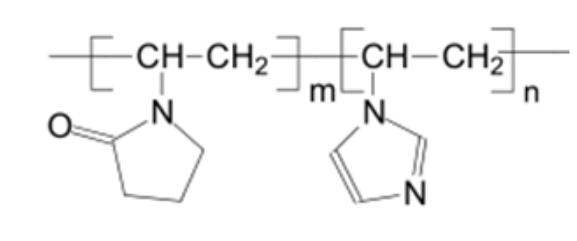
The VP/VA copolymer stands out as the most widely utilized engineered variant. It combines Vinylpyrrolidone and vinyl acetate into a single unified chain. The vinyl acetate acts as an internal plasticizer. Formulators can directly control the final properties by adjusting the ratio between these two monomers.
A higher vinyl acetate content yields a more water-resistant, flexible film. A higher VP content maintains better solubility and superior adhesion. This tunable function-to-outcome relationship makes VP/VA indispensable. It remains the preferred choice for premium hair styling products. Industrial manufacturers also use it extensively for removable protective coatings and water-remoistenable adhesives.
Cationic copolymers address an entirely different set of formulation challenges. Polyquaternium-11 represents a prime example in this category. Manufacturers create it by copolymerizing VP and dimethylaminoethylmethacrylate (DMAEMA).
This specific combination generates a positive electrical charge along the polymer backbone. Human hair and skin carry a natural negative charge. The opposing charges create a strong electrostatic attraction. This substantive binding outcome proves essential for personal care formulation. You need this technology to manufacture effective conditioning agents and advanced skin barrier creams.
Cross-linked networks represent the third major category of this chemical family. Manufacturers polymerize the monomer alongside a specialized cross-linking agent. This process creates a dense, three-dimensional molecular structure known commercially as Crospovidone or PVPP.
This complex structural profile delivers a highly unique physical behavior. The resulting polymer becomes entirely insoluble in water. It cannot dissolve in standard organic solvents either. However, the three-dimensional network remains highly porous and completely swellable.
This material solves a very specific mechanical problem for industrial formulators. It provides rapid physical expansion without undergoing chemical dissolution. Water enters the porous network through capillary action. The polymer particles then swell outward rapidly. This creates substantial internal mechanical stress within a confined space.
The pharmaceutical industry relies heavily on this exact mechanism. Drug manufacturers deploy Crospovidone as a premier super-disintegrant. They blend it into oral solid dosage formulations. When a patient swallows the tablet, the Crospovidone particles absorb gastric fluids instantly. They swell aggressively and shatter the tablet from the inside out. This rapid breakdown ensures the active pharmaceutical ingredients (APIs) release immediately into the digestive tract.
The beverage industry leverages a completely different property of this cross-linked network. Beer and wine naturally contain polyphenols and proteins. These organic compounds bind together over time to create undesirable cloudiness or "haze". Brewers and vintners use PVPP as an elite clarifying agent.
The insoluble polymer particles form strong hydrogen bonds directly to the haze-causing polyphenols. The PVPP absorbs these impurities like a molecular sponge. Facility operators then filter the swollen polymer out of the liquid entirely. This fining process dramatically improves visual clarity and extends product shelf-life.
Procuring these specialty polymers requires rigorous due diligence. You cannot simply purchase the cheapest available option. Sourcing teams must evaluate potential suppliers against strict chemical and regulatory parameters.
Purity and residual monomer compliance stand as the most critical evaluation factors. The raw NVP monomer poses documented toxicity risks. It acts as a severe irritant and carries suspected carcinogenic properties. Global regulatory bodies strictly govern how much unreacted monomer can remain in the final polymer product.
Pharmacopeia standards universally mandate remarkably low residual limits. The United States Pharmacopeia (USP), European Pharmacopoeia (EP), and Japanese Pharmacopoeia (JP) demand residual monomer levels fall below 10 parts per million (ppm). Certain advanced medical applications require stricter limits below 1 ppm.
Request Official Documentation: Always demand a comprehensive Certificate of Analysis (CoA) for every single batch.
Verify Testing Methodology: Ensure the supplier utilizes High-Performance Liquid Chromatography (HPLC) to detect residual monomers accurately.
Conduct Independent Audits: Perform secondary third-party laboratory testing before qualifying a new international supplier.
Establish Quality Agreements: Lock in strict threshold limits in your formal purchasing contracts to prevent standard drift.
Grade specificity represents another major sourcing constraint. Manufacturers produce these polymers in Technical, Cosmetic, and Pharmaceutical grades. The chosen grade must align perfectly with your final product compliance requirements. Substituting a cheaper technical grade for cosmetic use introduces severe regulatory risk. Technical grades often contain elevated heavy metals and unacceptably high monomer levels.
Formulators must also evaluate peroxide and moisture limits aggressively. This step proves particularly crucial when developing pharmaceutical excipients. Trace peroxides form naturally within the polymer over time through auto-oxidation.
These reactive oxygen species can severely degrade sensitive active pharmaceutical ingredients. They compromise drug efficacy and shorten product shelf-life. Formulators must demand specialized low-peroxide grades. Furthermore, proper packaging under inert gas environments helps limit ongoing peroxide formation during transit.
Successful sourcing only solves half the equation. Facility managers face significant operational challenges during actual manufacturing. Mishandling these polymers routinely leads to ruined batches and damaged processing equipment.
Hygroscopicity challenges cause the most frequent manufacturing failures. Linear PVP rapidly absorbs ambient moisture from the factory air. The dry powder quickly transitions into a sticky, unmanageable mass. This behavior causes severe caking inside storage hoppers. It clogs pneumatic transfer lines and stalls expensive blending machinery.
Environmental Controls: Manufacturing facilities must maintain strict environmental humidity control. Relative humidity must stay below 40% in blending areas.
Packaging Integrity: Operators must reseal bulk containers immediately after dispensing to prevent moisture ingress.
Temperature Equilibrium: Allow cold drums to reach ambient room temperature before opening to prevent interior condensation.
Flow Agents: Consider pre-blending the polymer alongside a specialized flow agent like colloidal silicon dioxide to improve handling.
Solvent compatibility also demands careful bench-level verification. These polymers are broadly soluble in water, short-chain alcohols, and select chlorinated compounds. However, complex solvent mixtures behave unpredictably. Formulators must verify compatibility across the entire specific solvent system. Failure to do so often triggers sudden precipitation or irreversible phase separation.
Thermal degradation presents serious risks during high-heat processing. Prolonged exposure to high temperatures causes the polymer chains to cross-link unintentionally. This ruins solubility entirely. Furthermore, extreme heat leads to noticeable color degradation. The material turns from bright white to an unappealing dark yellow.
You must evaluate detailed thermal stability profiles beforehand. This step remains absolutely mandatory for advanced techniques like hot-melt extrusion (HME). Engineers must map the polymer's glass transition temperature carefully. They must keep extruder barrel temperatures strictly below the documented degradation threshold to ensure product viability.
This polymer family delivers unparalleled versatility to modern manufacturing. We have traced its journey from a highly reactive monomer to incredibly stable commercial materials. You now understand how linear homopolymers, flexible copolymers, and swellable cross-linked networks function differently.
Successful deployment ultimately depends on precise alignment. You must match physical properties like molecular weight and copolymer ratios directly to your application goals. Simultaneously, you must enforce unyielding regulatory compliance regarding residual monomer levels.
Your formulation teams should take immediate action to mitigate risk. Request specific Technical Data Sheets (TDS) and Safety Data Sheets (SDS) from your shortlisted suppliers. Procure sample batches across multiple K-value ranges. Conduct rigorous bench-testing to guarantee optimal performance before initiating full-scale commercial production.
A: Vinylpyrrolidone (NVP) serves as the reactive, liquid monomer building block. Polyvinylpyrrolidone (PVP) is the safe, stable, solid polymer. Manufacturers create PVP by linking thousands of individual NVP monomers together through controlled chemical reactions.
A: Yes. Highly purified grades of PVP and Crospovidone hold global FDA approval. The major pharmacopeias regulate them strictly. They function universally as safe, biologically inert excipients for oral medications and complex food processing applications.
A: Formulators switch to copolymers when standard PVP proves too sensitive to ambient moisture. The homopolymer is highly hygroscopic. Copolymers like VP/VA provide a more flexible, water-resistant film. They prevent the final product from becoming tacky in humid environments.
A: The K-value acts as a standard industry measurement. It correlates directly with the intrinsic viscosity and molecular weight of the polymer. Lower K-values denote smaller molecules with lower viscosity. Higher K-values indicate massive molecules exhibiting very high solution viscosity.