JIAOZUO ZHONGWEI SPECIAL PRODUCTS PHARMACEUTICAL CO.,LTD

Views: 0 Author: Site Editor Publish Time: 2026-10-21 Origin: Site
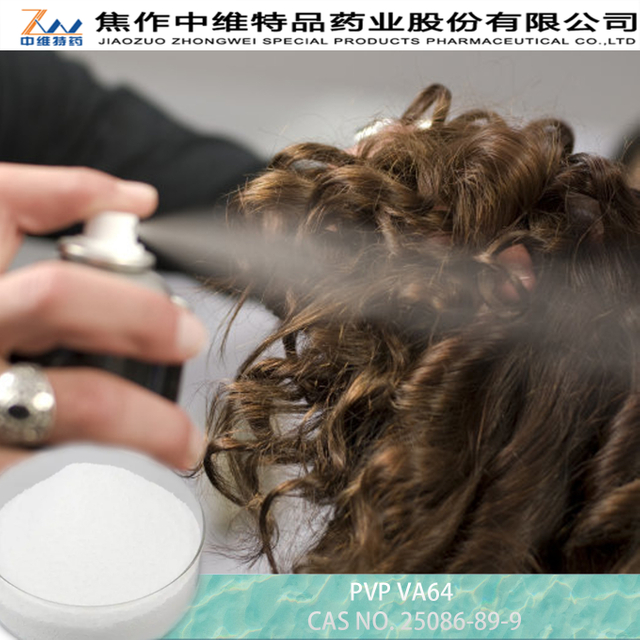
Picture a busy morning. You rush out the door, giving your meticulously crafted hairstyle one final blast of aerosol mist. Within mere seconds, the complex architecture of your hair freezes perfectly in place. Have you ever paused to wonder how your favorite styling product achieves this instantaneous hold? The secret lies in a highly engineered ingredient known as Polyvinylpyrrolidone PVP. As a foundational staple in the cosmetics industry for decades, this specific compound acts as the invisible architect behind everything from gravity-defying extreme-hold gels to lightweight volumizing mists.
In this comprehensive guide, we will dive deep into the objective chemistry and formulation science of this remarkable ingredient. We will explore how its unique properties allow for rapid solvent evaporation and how it stacks up against other cosmetic options on the market. Furthermore, we will examine what cosmetic chemists are doing to overcome common consumer pain points like flaking and humidity sensitivity. Whether you are a salon professional, a formulation chemist, or a meticulous consumer looking for the perfect product, this article decodes the evidence-based mechanisms behind rapid-drying hair formulations.
Rapid Evaporation Dynamics: These formulations achieve their fast-setting properties because the core ingredient is highly soluble in volatile solvents like ethanol. Upon atmospheric exposure, these solvents flash off rapidly, leaving a structural matrix behind.
Superior Microscopic Scaffolding: Functioning as a highly effective coating agent, the polymer encapsulates individual hair fibers. It creates a clear, rigid microscopic cast that locks strands in place almost instantaneously.
High Water Solubility: Despite providing a robust and fast-drying hold, the material remains inherently hydrophilic. This ensures the product can be thoroughly removed with standard cleansing surfactants, preventing long-term residue buildup.
Formulation Flexibility: Within the beauty sector, chemists frequently blend this core ingredient with other copolymers like Vinyl Acetate. This engineering balances fast-setting rigidity with necessary flexibility and environmental moisture resistance.
Consumer Impact and Application: Comprehending the underlying chemistry empowers users to select appropriate formulations. It mitigates common application errors that lead to visible white flaking or undesirable tackiness in humid climates.
At its chemical core, Polyvinylpyrrolidone is a synthetic, non-toxic, water-soluble polymer derived from the monomer N-vinylpyrrolidone. In the realm of cosmetic chemistry, polymers are essentially large molecules composed of long, repeating structural chains that possess excellent adhesive properties. Its unique molecular structure allows it to dissolve seamlessly into liquid delivery systems, only to solidify rapidly once applied to a surface.
The historical trajectory of this compound is a fascinating journey of scientific adaptation. Rooted originally in medical science during World War II, its high biocompatibility and solubility led to its initial development as a synthetic blood plasma expander for trauma victims. As medical technologies advanced and the war concluded, the chemical industry recognized the polymer's exceptional fiber-binding capabilities. By the 1950s, it transitioned from the medical field into commercial cosmetics. It revolutionized the sector by replacing heavy, greasy waxes with lightweight, invisible holds, thereby becoming the foundational building block for modern aerosol sprays.
In contemporary hair care, the primary job of this ingredient is to provide reliable structural support, enhanced volume, and sustained hold. Unlike traditional oil-based pomades that weigh the hair down, it operates by forming a microscopic, weightless scaffold. This scaffold physically binds adjacent hair shafts together at intersection points. It maintains the desired architectural shape against gravity and movement without compromising the hair's natural appearance.
The rapid setting time of a Hair Spray is fundamentally governed by the thermodynamics of its solvent system. Delivery mechanisms rely heavily on dissolving the solid powder into a liquid carrier. Formulators typically utilize fast-evaporating, low-molecular-weight alcohols, such as ethanol or denatured alcohol, rather than water. Ethanol possesses a significantly higher vapor pressure than water, meaning it transitions from a liquid to a gas much faster at room temperature. When the product is atomized through a nozzle, the increased surface area of the fine mist accelerates this evaporation. The alcohol flashes off almost instantly upon contacting the open air, depositing the solid structural cast onto the hair.
From a macromolecular perspective, the setting process is driven by a mechanical action known as polymer chain entanglement. While suspended in the liquid solvent, the microscopic chains of the polymer are relaxed and mobile. As the solvent rapidly evaporates, the distance between these chains decreases drastically. They are forced together, quickly entangling and interlocking to transition from a fluid state into a rigid, solid matrix. Specifically, the speed and strength of this entanglement depend on the molecular weight, often denoted by the K-value. For instance, premium grades like the K-30 series exhibit a K-value between 27 and 32. This specific molecular weight provides the perfect balance, ensuring ultra-fast solvent release while maintaining a tough, transparent film.
A critical thermal property contributing to this rapid freeze is a relatively high Glass Transition Temperature, which sits around 150°C to 180°C depending on molecular weight. This is the specific temperature at which an amorphous material transitions from a hard, glassy state to a soft, rubbery one. Because this transition point is substantially higher than standard room temperature, the material naturally exists in a hard, rigid, and glassy state once the liquid carrier is removed. This thermal characteristic is directly responsible for the firm, fast-acting hold.
In the lexicon of cosmetic formulation, a Film Former refers to a specific class of chemical compounds capable of leaving a cohesive, continuous, and pliable layer upon application to a substrate. When applied to hair, the molecules do not merely sit as isolated particles. Instead, the chains align to construct an invisible, continuous matrix that spans across the applied area, providing uniform structural integrity.
The physical mechanics involve a process akin to microscopic spot welding. As the liquid product coats the cuticle, capillary action draws the solution to the intersections where individual fibers cross or touch. When the liquid dries, it wraps around the cuticle, creating a rigid cast. At these intersection points, the film fuses the adjacent fibers together. Rather than gluing the entire head of hair into a single solid block, this localized binding physically holds a complex, gravity-defying style in place while allowing for a natural look.
Beyond its mechanical strength, a significant advantage of utilizing this specific ingredient is its exceptional optical clarity. When the material solidifies, it forms a highly transparent layer with a refractive index that closely mimics that of natural hair keratin. This transparency ensures that the product does not scatter light in a way that would dull the hair. Consequently, it provides a robust hold while preserving, and sometimes even enhancing, the hair's natural gloss and shine.
To truly understand the dominance of this ingredient, it is helpful to evaluate it objectively against other common options utilized in the market. As formulation engineers, we look closely at setting speed, rigidity, and environmental resistance.
Feature / Polymer Type | Pure Polyvinylpyrrolidone | Copolymer Blends like VA | Acrylates & Carbomers |
|---|---|---|---|
Setting Speed | Extremely Fast - Instant Snap | Moderate to Fast | Slower - Requires more drying time |
Hold Rigidity | High - Rigid, Stiff | Medium - Flexible | Low - Soft, Touchable |
Humidity Resistance | Low - Highly Hygroscopic | Moderate | High |
Washability | Excellent - Water Soluble | Good | Can require clarifying treatments |
To mitigate some limitations of the pure compound, cosmetic chemists frequently synthesize it with Vinyl Acetate to create a copolymer. While the pure iteration delivers an exceptionally fast set and a very hard hold, it is highly sensitive to environmental moisture. The addition of the vinyl acetate monomer introduces water resistance and flexibility to the molecular chain. Therefore, copolymers offer a more balanced performance, reducing moisture sensitivity while maintaining a respectable setting speed.
In contrast, the modern market also utilizes newer classes, such as acrylate copolymers and carbomers, typically found in soft-hold gels and styling creams. Carbomers excel at creating high-viscosity gels but completely lack the rigid snap. Acrylates offer a softer, more pliable hold that allows for movement and restyling. The traditional pyrrolidone-based formula is engineered specifically for scenarios requiring maximum immobilization and rapid drying, making it the superior choice for extreme-hold applications.
The efficacy of a Styling Polymer relies heavily on precise formulation chemistry. Cosmetic chemists must meticulously balance the ratio of the active polymer, solvents like water and alcohol, and pressurized propellants in aerosols. By manipulating the ratio of fast-evaporating ethanol to slower-evaporating water, formulators can precisely calibrate the drying time. This ensures the product sets fast enough to freeze the style, but slow enough to allow the user a brief, crucial window for final adjustments.
Because the high transition temperature creates a very hard, glassy film, it can sometimes be too brittle. If the hair is subjected to sudden mechanical stress, like a strong gust of wind or turning the head quickly, a brittle film will fracture. To prevent this, formulators incorporate plasticizers, such as glycerin, panthenol, or specialized lightweight silicones. These additive molecules intersperse themselves between the rigid chains. They increase the free volume and allow the matrix to bend slightly without breaking.
Furthermore, the chosen delivery mechanism significantly impacts the final setting speed. Aerosols utilize propellants like dimethyl ether that atomize the formula into ultra-fine droplets. This maximizes the surface-area-to-volume ratio, resulting in the fastest possible solvent evaporation. Mechanical pump sprays produce larger liquid droplets and often contain higher water ratios to prevent nozzle clogging, naturally resulting in a slightly slower setting time.
A common consumer grievance associated with fast-setting gels is the appearance of white residue, often mistakenly identified as dandruff. This phenomenon is a direct mechanical failure of the rigid film. Once the matrix has fully dried and set, it creates a hard cast. If the user subsequently brushes, combs, or aggressively manipulates the hair, the mechanical force fractures the continuous layer. These microscopic fractures break into tiny, transparent shards that scatter light, appearing to the naked eye as visible white flakes. The straightforward solution lies in application technique: always finalize the style before the product fully dries.
Imagine stepping out into a humid, drizzly morning after meticulously crafting your hairstyle. If your product relies solely on the pure polymer, you might face a challenge. Because the material contains water-loving functional groups, it acts almost like a microscopic sponge. In high-humidity environments, the film absorbs ambient water vapor. This absorbed moisture acts as an unintentional plasticizer, lowering the transition temperature. As a result, the once-rigid hold becomes soft, causing the style to lose volume, and the surface of the hair to feel unpleasantly sticky or tacky.
Despite the challenges posed by humidity, this hydrophilic nature offers a massive advantage regarding product removal in the Personal Care routine. Unlike heavy styling waxes, petrolatum-based pomades, or non-soluble silicones that require harsh, stripping clarifying shampoos to remove, this ingredient is exceptionally water-soluble. It dissolves readily upon contact with warm water and standard anionic surfactants found in daily shampoos, preventing cumulative buildup that can choke the hair follicle over time.
Based on recent market analyses regarding cosmetic polymers, the industry is witnessing a significant shift toward multi-functional formulations. Consumers now demand products that not only lock styles in place instantly but also offer heat protection and scalp care. Consequently, raw material manufacturers are focusing heavily on hybridizing traditional pyrrolidone chemistry with advanced bio-polymers. Current innovations are not necessarily replacing the classic ingredients but rather upgrading them. Chemical manufacturers are engineering modified versions of the molecule by grafting hydrophobic side chains onto the traditional backbone. This creates next-generation materials that retain the rapid solvent-release profile required for a fast set but form a moisture-repellent barrier once dry, effectively locking out humidity.
In response to the surging consumer demand for clean beauty, formulators are increasingly developing hybrid systems. These advanced formulations blend the reliable, instant-freeze power of synthetic polymers with natural, bio-based alternatives like modified corn starches, pullulan, or flaxseed extracts. This trend reflects a broader market movement where sustainability intersects with high-performance chemistry. We are seeing an uptick in research dedicated to lowering the carbon footprint of the manufacturing process while maintaining the legendary snap hold that salon professionals rely on.
For consumers and salon professionals aiming to leverage these benefits, understanding the International Nomenclature of Cosmetic Ingredients is essential. On the back of the bottle, look for terms like Polyvinylpyrrolidone or simply PVP near the top of the list, indicating a high concentration for maximum hold. If you live in a rainy climate and require enhanced moisture resistance, scan for copolymer variations, typically listed as VP/VA Copolymer.
Selecting the appropriate formulation depends heavily on individual hair characteristics and the underlying polymer specifications. Individuals with fine or thinning hair benefit most from lightweight, aerosolized mists utilizing medium molecular weight grades like K-30. The rapid evaporation ensures volume and lift at the roots are locked in before any liquid weight can collapse the style. Conversely, those with thick, coarse, or unruly curly hair require stronger structural support. Dense pastes or high-concentration gels utilizing higher molecular weight grades like K-90 are ideal here, as the higher active payload provides the necessary mass and rigidity to control stubborn fibers.
To maximize efficacy and avoid common pitfalls, proper execution is key. Because the solvent flashes off rapidly, you must work efficiently. Apply the product to slightly damp or dry hair, immediately molding the desired shape. Once the snap occurs and the matrix hardens, strictly avoid further combing or brushing to prevent the cast from fracturing into white flakes. When using aerosols, maintaining a spraying distance of 10 to 12 inches ensures an even, microscopic distribution, optimizing both optical clarity and overall hold.
Polyvinylpyrrolidone remains an undisputed heavyweight champion in the beauty and cosmetics industry, and for excellent reason. The ability of these formulations to set so incredibly fast comes down to elegant, highly effective chemistry. They dissolve seamlessly in volatile solvents and rapidly form a clear, rigid microscopic scaffold around the hair shaft. While the market continues to evolve with hybrid innovations and moisture-blocking nanotechnology, the instant freeze and reliable structural support provided by this classic ingredient make it an irreplaceable tool in gels, mousses, and aerosols.
If you are a formulator or brand looking to elevate your next hair care line, sourcing high-purity ingredients with precise K-values is non-negotiable. By understanding the science behind the spray, you can make smarter, targeted choices. Explore the comprehensive range of premium polymers at ZW-PVP to find the exact chemical profile your formulation demands, ensuring your products deliver flawless, gravity-defying results every time.
Yes. It is a highly stable, non-toxic, and non-irritating compound that has been safely utilized in both the medical and cosmetic industries for many decades. It is rigorously tested and globally approved by regulatory bodies for safe use in daily consumer goods.
Because the ingredient is an excellent coating agent, it creates a hard, rigid cast over the hair shaft as it dries. If you brush, comb, or excessively manipulate your hair after it has completely set, that rigid layer fractures into tiny pieces. These microscopic broken fragments reflect light differently, appearing as white flakes. To avoid this, always finish shaping your style before the product fully dries.
No, it does not cause hair loss or structural damage. The material sits strictly on the exterior of the hair shaft to provide mechanical hold; it does not penetrate the cuticle or the scalp follicle. It simply acts as a temporary exterior scaffold.
Because this specific polymer is highly hydrophilic and water-soluble, it washes away easily. It dissolves readily upon contact with warm water and standard anionic surfactants found in your daily shampoo, meaning you do not need harsh, stripping clarifying treatments to remove it.
The pure form of this polymer is hygroscopic, meaning it naturally attracts and absorbs moisture from the surrounding environment. In high humidity or rain, the dried film absorbs ambient water vapor, causing the matrix to soften and feel sticky or tacky. To combat this, look for weather-resistant formulations that blend it with moisture-blocking copolymers.
This synthetic option is specifically engineered for maximum hold, brilliant optical clarity, and incredibly fast-drying performance. Natural alternatives, such as aloe vera, flaxseed extract, or modified starches, generally offer a much softer, more flexible hold. Natural options typically take significantly longer to dry and usually cannot provide the extreme, gravity-defying structural hold required for complex styles.